Assembly Workflow Planning: The Discipline Without Software
Every discipline in product creation runs on dedicated software - except assembly workflow planning. Engineers still bridge 3D product design and operational logic with Excel and PowerPoint.
THE GAP
From design to execution, every discipline in product creation runs on dedicated software. Product Designers shape geometry in CAD. Process controllers run ERP, merging operational logic with business logic to derive production jobs for the shopfloor. But engineers still bridge 3D product design and 2D operational logic with general-purpose office tools like Excel and PowerPoint.
The missing discipline is Assembly Workflow Planning - transforming product geometry into the operational logic of production. Planners derive assembly sequences from 3D designs, navigating spatial constraints and part relationships. They define processes that fulfill product requirements while optimizing for production efficiency. The output: the events and milestones that transform individual parts into the whole product.
Engineers plan Assembly Workflows in Excel and PowerPoint - not by choice, but because dedicated software didn’t exist yet.
THE COST
Without dedicated software, assembly planners carry the full cognitive load of translation. They move between a 3D viewer - or physical prototype - showing spatial relationships, and a spreadsheet capturing process logic. Only the planner connects them - mentally. Every part name, every sequence decision - tracked in their heads across systems.
Assembly workflows cross team boundaries. Product design, process engineering, line ramp-up, the shopfloor, and assembly workers all need visibility - for Design for Assembly (DFA) reviews, PFMEA analyses, production validation, and work instructions. To make abstract sequences understandable, planners take screenshots and paste them into PowerPoint.
But every screenshot, every copied spreadsheet, every derivative document duplicates data and severs the link to its source. When the product changes, planners must manually update every downstream document. In one industry implementation, we traced an engineering change through to the work instruction: 22 manual steps before a single update reached the shopfloor.
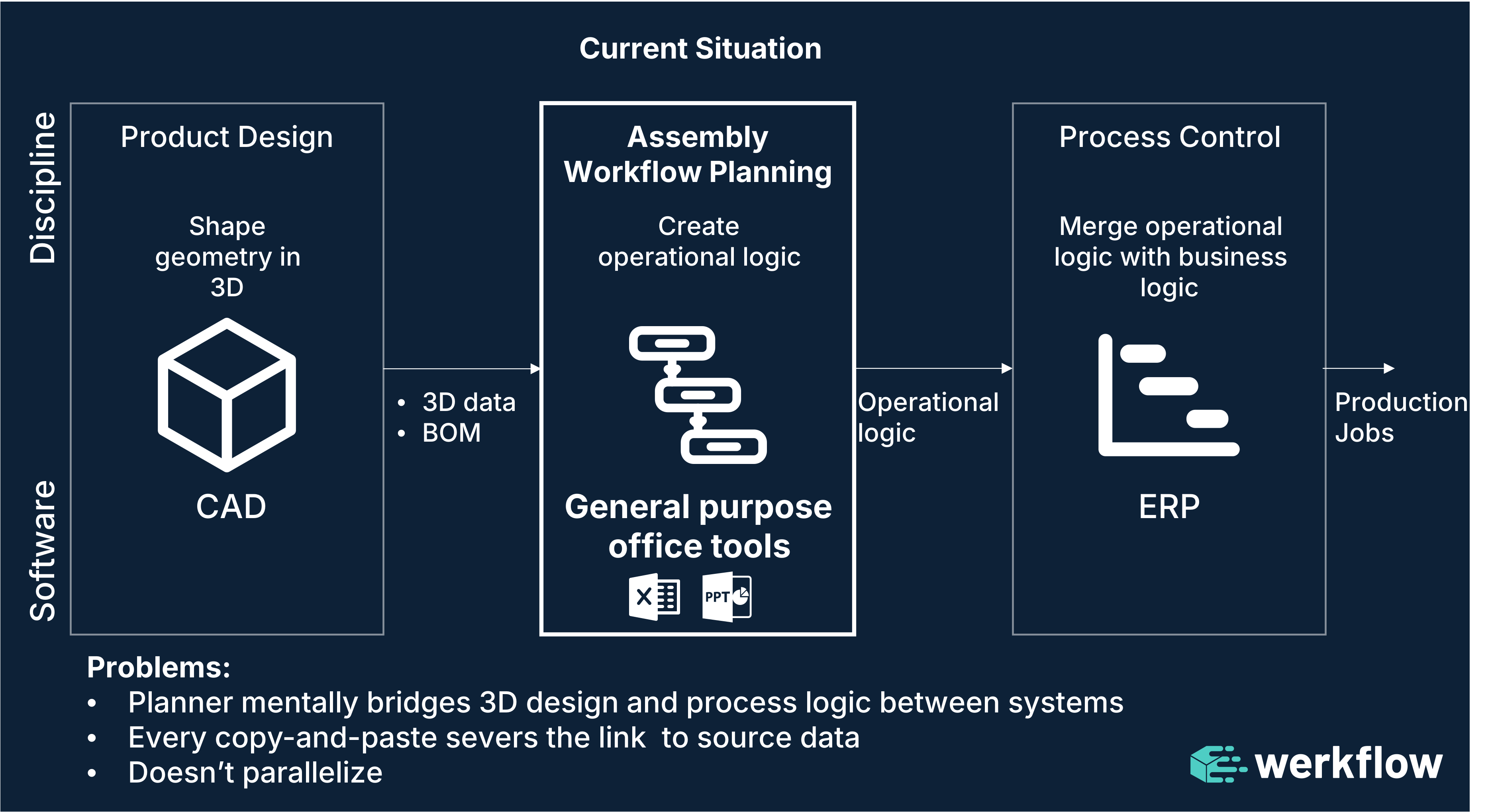
This isn’t how it has to work. For machining, dedicated process planning software exists. CAPP tools recognize CAD features and generate manufacturing operations for, e.g., milling or drilling. Assembly has no equivalent. The discipline is more variable - processes don’t repeat the same way, and products don’t reuse the same machines. The discipline remained without dedicated software.
THE BREAKING POINT
Assembly workflow planning has become the bottleneck in product creation. Rising complexity and tightening timelines pressure a discipline that still lacks dedicated tooling.
Product complexity is rising. Customer individualization drives product variants. Advanced applications demand more parts and tighter integration. New technologies introduce new assembly challenges. Each compounds the planning work.
At the same time, pressure on lead times is intensifying. Market uncertainty means customers may move on during product development - and your expensive investment never pays off. Planning cycles haven’t accelerated to match.
And adding capacity doesn’t help. More planners means more coordination overhead. The manual approach doesn’t parallelize.
Werkflow Assembly Workflow Planning
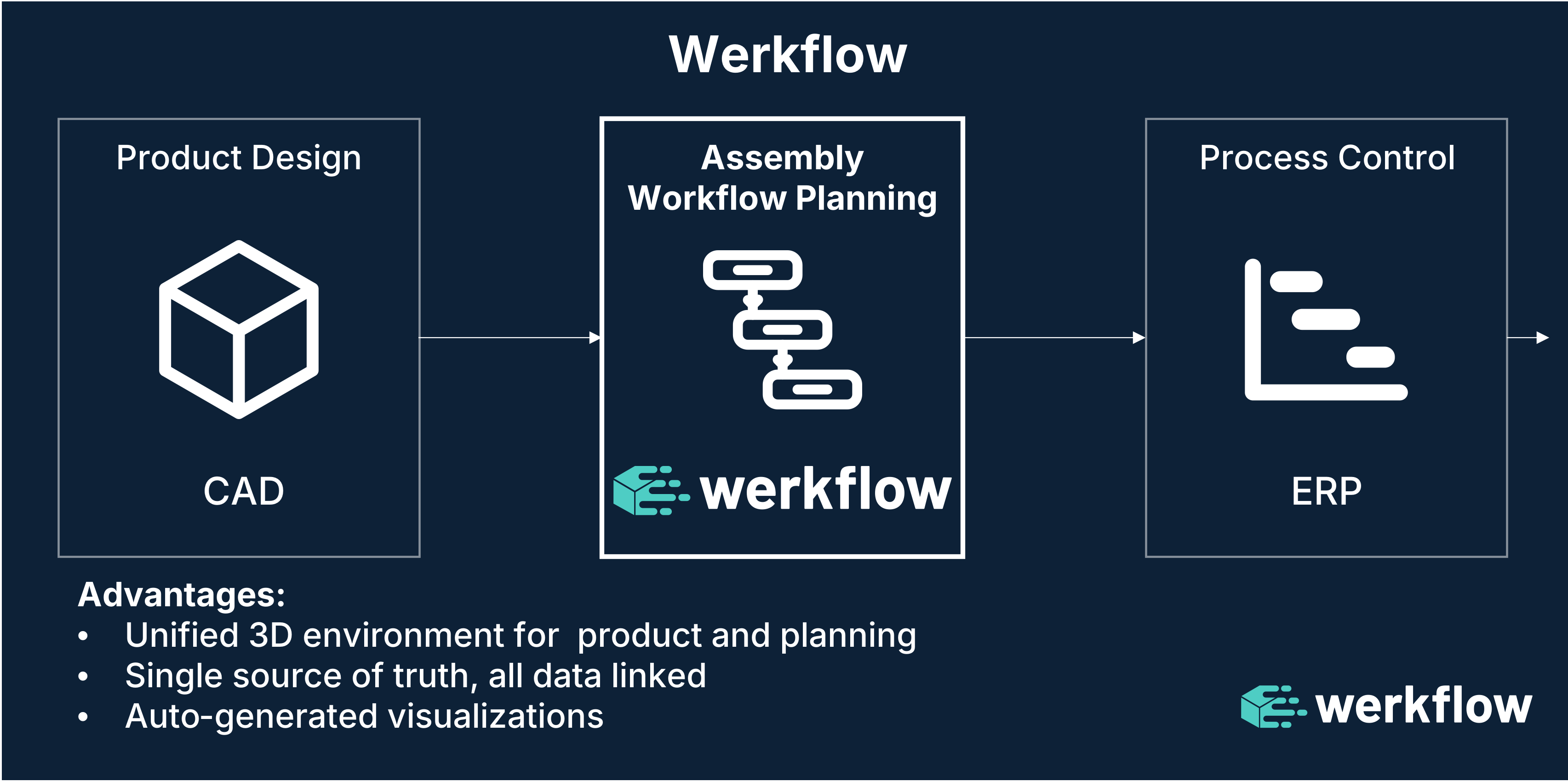
Not a viewer alongside a spreadsheet - assembly workflow planning needs a unified environment where planning and product data share the same space.
In this environment, planners work directly in 3D. They define workflows visually - selecting parts directly instead of memorizing names and typing them into cells. They define sequences on the geometry itself, not in disconnected rows. Spatial constraints become visible, not memorized.
Data stays linked. Processes connect directly to part geometry - no translation layer. Time estimates, resources, and constraints attach to the process itself, not scattered across files. Visualizations generate automatically from this connected model - no screenshots, no manual documentation. One source of truth feeds downstream documents - work instructions, validation reports, training materials.
Engineering changes propagate. Update a part, and the affected sequences surface automatically. Update a process, and the work instructions reflect it. Reorder a sequence with drag-and-drop, and the 3D view updates instantly for validation. The 22-step manual cascade shrinks to two.
Follow our updates
Assembly planning deserves dedicated software. We’re building it at Werkflow.
In practice, engineering change updates that required 22 manual steps now take 2 - reducing effort by 92%.
If assembly planning is part of your work, follow our journey.
Stay in the loop
Get updates on assembly planning software, directly to your inbox.